Nationwide Pest Defense provides comprehensive pest control services in Riverside, addressing structural threats caused by arid inland heat, agricultural proximity, and seasonal pest migrations. Finding specialized pest control services near me requires evaluating targeted barrier performance against invasive desert and citrus belt species.
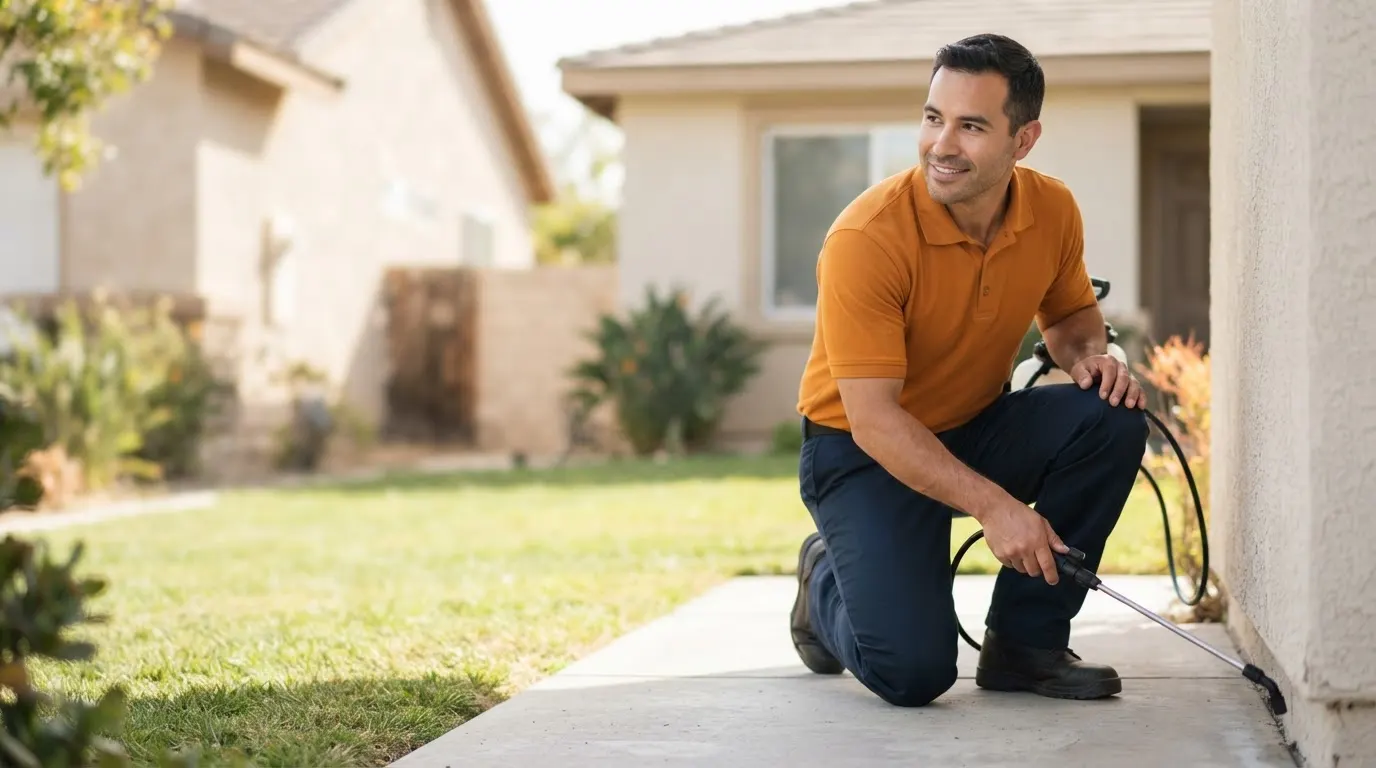
A professional pest control services company in Riverside is a licensed structural pest management provider that deploys perimeter barriers, physical exclusion seals, and targeted eradication treatments across residential and commercial properties in Riverside County.
Every service reflects the same meticulous attention to detail, whether it's a single job or a larger pest control services project across Riverside.
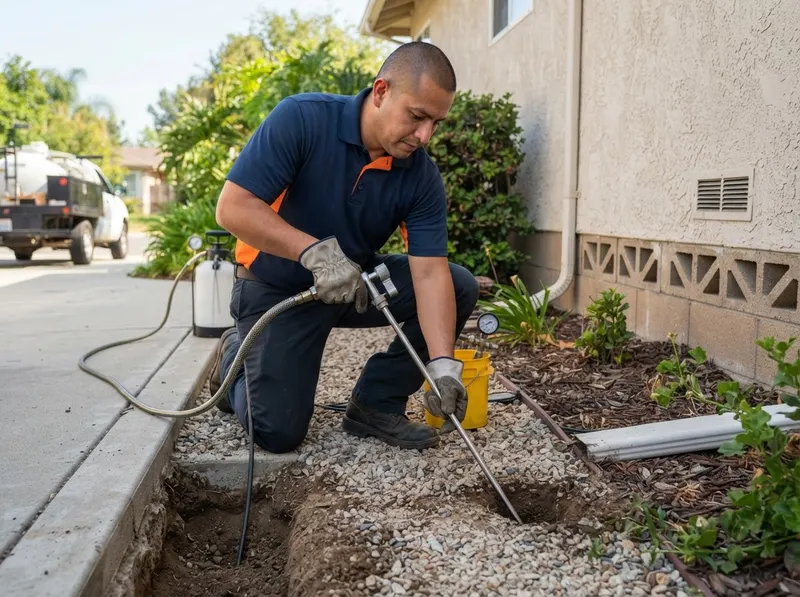
Subterranean termite eradication creates an unbroken chemical barrier along structural stem walls, targeting damp inland soils. Technicians excavate continuous trenches along the foundation perimeter according to structural specifications outlined by the Structural Pest Control Board . Pressurized liquid applications penetrate beneath slabs, preventing Reticulitermes hesperus colonies from constructing subterranean mud tubes toward interior wood sills. In properties with concrete flatwork directly abutting exterior structural footings, technicians utilize precision rotary hammer drills spaced twelve inches apart to inject termiticide beneath driveways and patios, establishing a continuous treated perimeter zone. The soil treatment binds directly to soil particulates, producing an invisible toxic transfer matrix that foraging worker termites distribute throughout the primary subterranean nest over twenty-eight to forty-five days, terminating the reproductive queen without requiring internal drilling inside finished living spaces.
Get a quote →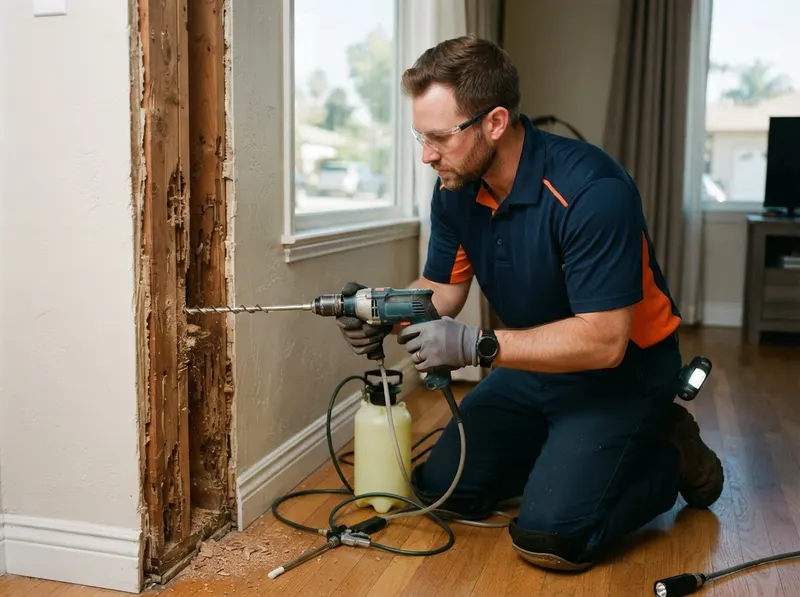
Drywood termite defense addresses structural wood members inside attics, rafter tails, and window frames without subterranean ground contact. Inspection confirms frass ejection ports before technicians execute localized drill-and-injection applications directly into internal timber galleries using targeted borate formulations or expander foams, eliminating localized colonies while preserving existing drywall and exposed framing. Technicians verify moisture levels within structural timbers and assess gallery expansion along roof truss systems, following strict engineering and preservation standards established by the Forest Products Laboratory . This focused precision treatment avoids the extensive logistical disruption, landscape damage, and utility shutoffs associated with structural tarpaulin fumigation, delivering targeted chemical transfer that crystallizes within the wood fiber to repel future swarming alates for multiple seasons.
Get a quote →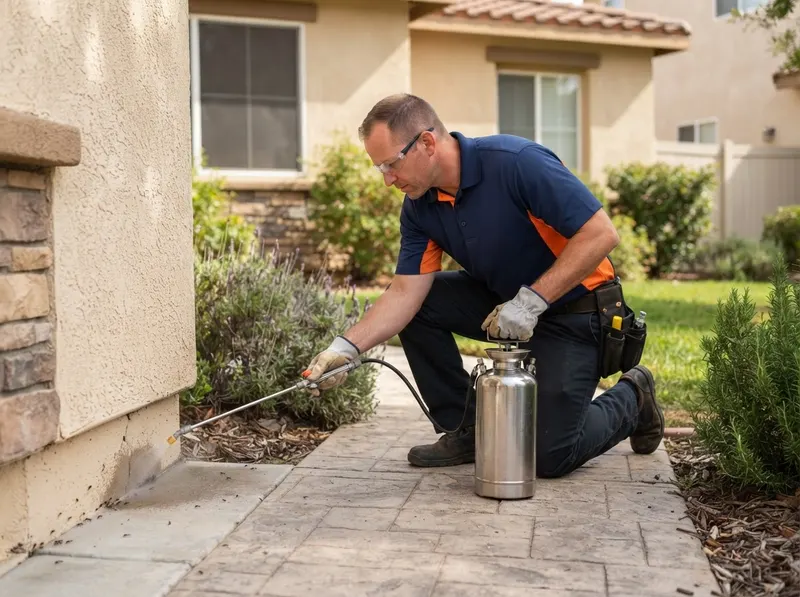
Argentine ant eradication halts massive multi-queen supercolonies driven into indoor moisture basins by extreme Inland Empire summer temperatures. Applying undetectable, non-repellent liquid formulations around building foundations ensures foragers transport active ingredients deep into subterranean nests, adhering to structural application standards governed by the Environmental Protection Agency rather than causing defensive colony splitting. Standard consumer pyrethroid insecticides cause rapid colony budding, where single nests fracture into dozens of satellite colonies within wall voids; our perimeter methodology deploys delayed-action formulations that workers carry past structural thresholds directly into primary nesting chambers. Technicians treat a comprehensive three-foot vertical band up exterior foundation walls combined with a five-foot horizontal ground perimeter band around plumbing hose bibs, air conditioning condensation drains, and concrete expansion joints.
Get a quote →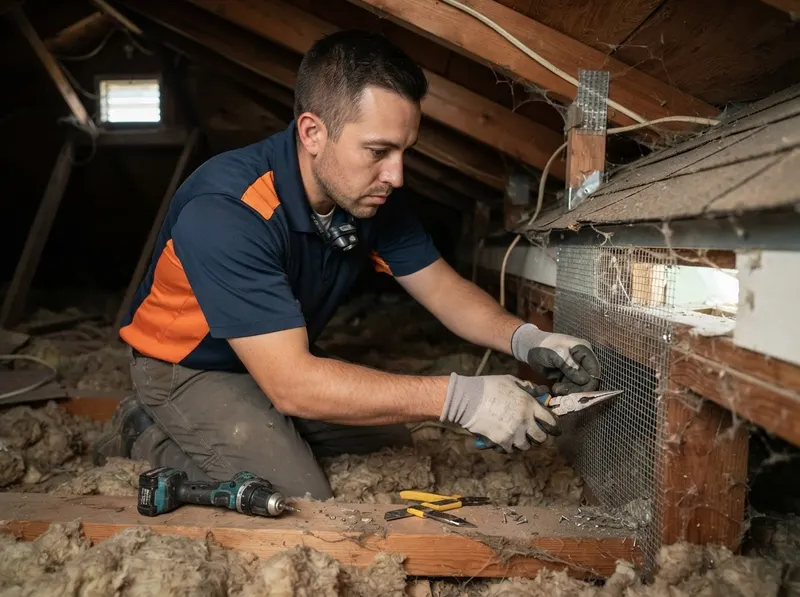
Roof rat exclusion terminates active rodent infestations across attic zones, soffits, and subfloor voids common in properties bordering mature citrus trees. Technicians seal all exterior structural voids exceeding one-quarter inch using heavy twenty-gauge steel hardware cloth, metal flashing, and structural sealants, following guidelines established by the Centers for Disease Control and Prevention prior to mechanical trapping. Structural technicians inspect roof hips, ridge vents, eave junctures, and plumbing stacks where roof rats gain leverage to chew through soft cedar siding or flexible crawlspace screens. Once the building envelope is mechanically fortified against re-entry, internal snap traps are strategically installed along structural travel runways and inspected on strict follow-up intervals until attic motion sensors confirm zero remaining activity, fully preventing decaying carcasses from generating odor or fly breeding inside enclosed wall spaces.
Get a quote →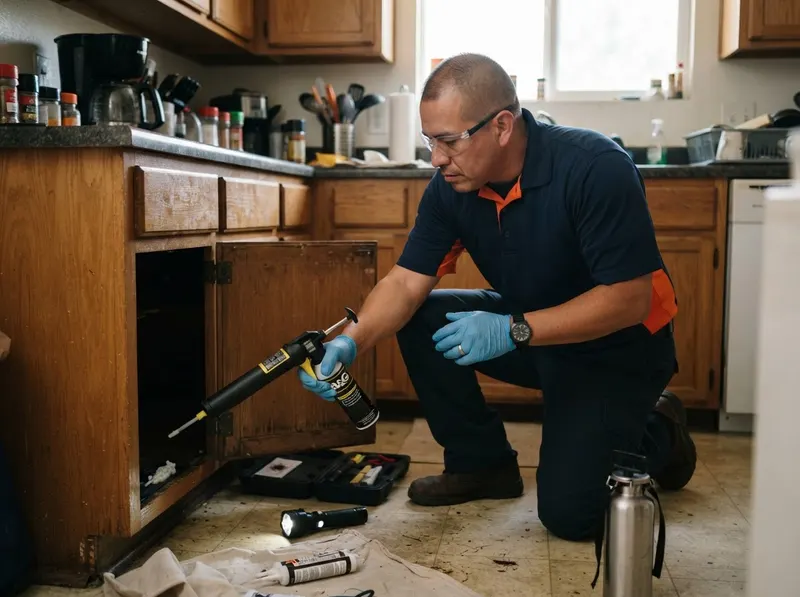
Cockroach defense neutralizes municipal sewer infiltrations and domestic indoor nesting sites near moisture junctions. Technicians apply targeted insect growth regulators, microencapsulated perimeter sprays, and precision bait gels inside voids, beneath cabinetry, and around sub-slab cleanouts, disrupting biological reproductive cycles in compliance with California Department of Pesticide Regulation mandates. German cockroach protocols target tight mechanical harbors around dishwashers, refrigerator compressor coils, and under-sink pipe collars using low-toxicity fipronil and hydramethylnon baits that prevent ootheca egg capsule viable development. For American cockroaches emerging from exterior municipal water vaults and perimeter soil beds during hot summer evenings, deep void dusting within foundation perimeter cleanouts and crawlspace perimeters halts nocturnal indoor invasions without generating airborne chemical drift.
Get a quote →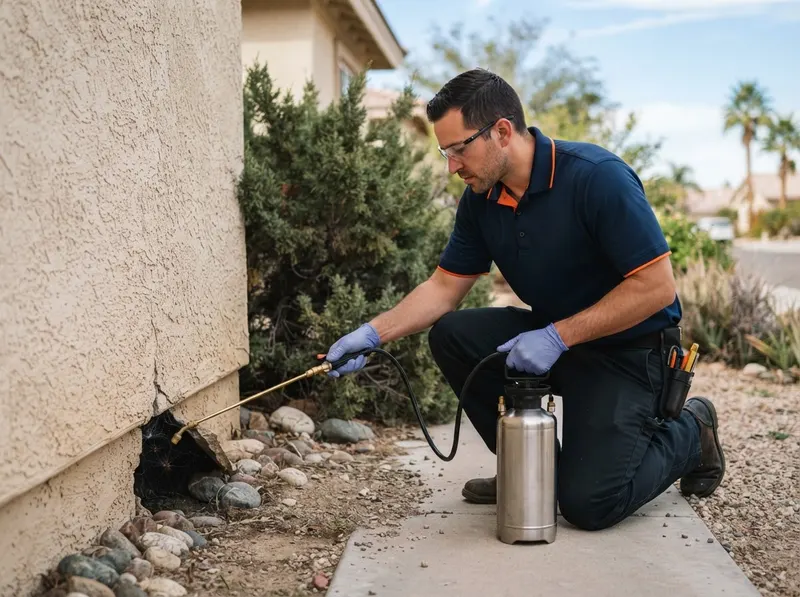
Spider defense eliminates established populations of Western black widows and aggressive desert arachnids inhabiting foundation weep screeds, block walls, and subfloors. Detailed mechanical de-webbing breaks life cycles by removing egg sacs, followed by residual microcrystalline perimeter applications across structural transition zones to eliminate ongoing insect food supplies. Arachnids possess elevated sensory organs and do not groom themselves like insects, meaning standard contact sprays prove ineffective unless applied directly to their bodies or formulated with specialized microencapsulated suspensions that cling to structural masonry surfaces. Technicians sweep exterior eves, window sills, meter boxes, and garage corners using telescopic carbon fiber poles, physically removing dense silk webs and marble-sized egg cases before treating foundation weep screeds according to application safety benchmarks specified by the Occupational Safety and Health Administration .
Get a quote →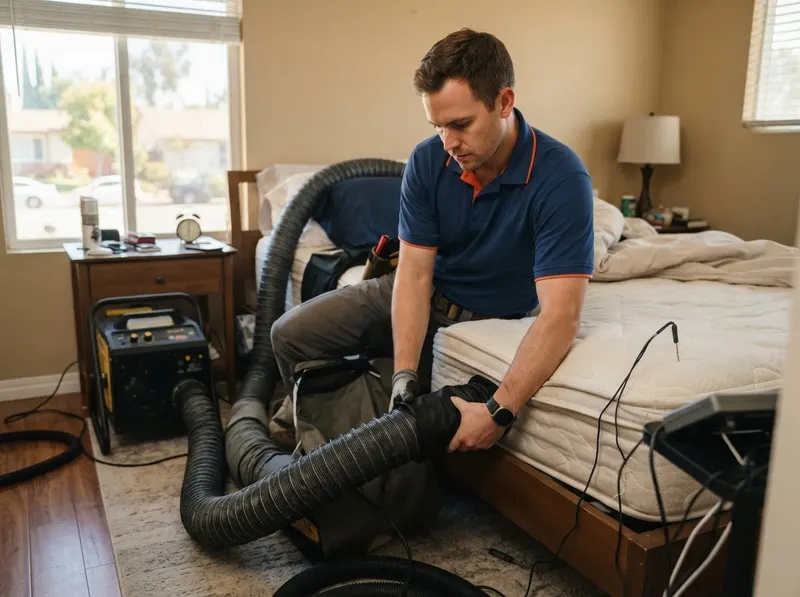
Bed bug remediation targets hidden harborage sites inside wall voids, baseboards, and furniture frames. Technicians utilize targeted contact applications, desiccant dust injections along electrical switch boxes, and deep void penetrations conforming to integrated pest management standards recognized by the Entomological Society of America to completely interrupt bed bug development without broadcast room contamination. Physical treatments leverage amorphous silica dust, which compromises the waxy protective cuticular layer of Cimex lectularius, inducing rapid desiccation across all life stages including pesticide-resistant strains. Detailed diagnostic monitoring incorporates specialized interceptor traps beneath furniture legs and outlet inspections to confirm total colony collapse across a thirty-day biological evaluation window, restoring indoor spaces without requiring mass disposal of mattresses or structural framing.
Get a quote →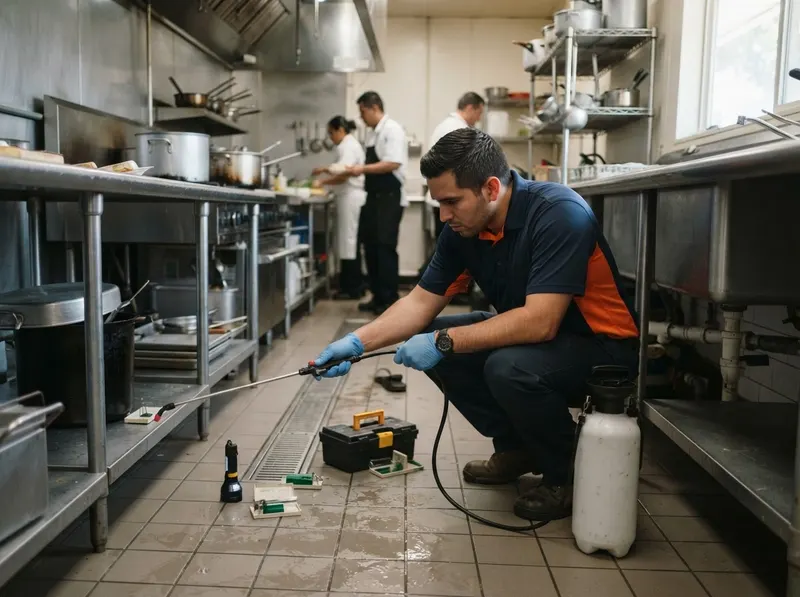
Commercial pest management reinforces foodservice establishments against drain flies, stored product beetles, and nocturnal rodents. Services incorporate non-pesticidal drain foaming, mechanical grease line sanitization, and regulatory documentation adhering to the Riverside County Department of Environmental Health , maintaining strict commercial compliance thresholds without operational interruption. Our commercial technicians deploy bio-enzymatic microbial foams deep into commercial floor drains to digest the biological gelatinous matrix where moth fly and phorid fly larvae develop. Perimeter structural monitoring includes heavy-gauge tamper-evident rodent stations mapped via barcoded monitoring software, providing detailed compliance tracking records for third-party auditing agencies and local municipal health inspectors.
Get a quote →You get a firm, itemized quote for your pest control services before any work begins, no surprises, no pressure.
Careful prep, tidy work, and a full cleanup when we are done. We treat your home and belongings like our own.
The same trusted, background-checked team from the first call to the final check.
Selecting appropriate structural defense depends on species biology and property design. If subterranean termites threaten structural framing near crawlspaces or stem walls, choose localized soil termiticide trenching or targeted boring; if drywood termites infest exposed attic rafters, choose structural fumigation or direct localized timber injection. The trade-off centers on non-invasive application speed versus full-envelope eradication.
If Argentine ants invade kitchens via plumbing penetrations, choose non-repellent transfer chemistry; if red imported fire ants establish exterior landscape mounds, choose granular micro-encapsulated baits. The trade-off involves immediate contact knockdowns that risk colony budding versus delayed toxicant transfer that eliminates subterranean queens over fourteen days. If roof rats occupy attic voids, choose mechanical exclusion sealing using heavy-gauge wire mesh paired with internal trapping; if field mice infiltrate garages, choose exterior perimeter tamper-resistant bait stations.
The trade-off is higher upfront mechanical labor and structural sealing expenses versus ongoing monthly rodent station maintenance. When German cockroaches infest interior moisture zones inside kitchens, deploy targeted bait matrices paired with insect growth regulators; when American sewer cockroaches emerge from exterior storm drains and perimeter cleanouts, apply microencapsulated wettable powders along sub-slab perimeters. The trade-off requires balancing rapid localized flush treatments against long-term insect reproduction suppression.
For exterior arachnid infestations along foundation lines, direct high-pressure mechanical de-webbing clears physical nesting structures immediately, whereas residual microcrystalline spray barriers prevent continuous re-colonization from adjacent landscape buffers over a sixty-day residual cycle. Addressing mud daubers or yellow jackets beneath roof eaves requires localized direct contact pyrethroid aerosol injection during evening low-activity hours rather than widespread daytime repellent applications that disperse defensive stinging insects across neighboring properties. Selecting exterior rodent bait networks protects external boundaries, yet failing to execute physical structural exclusion leaves open foundation vents and roof transitions vulnerable to recurring winter infiltrations whenever exterior ambient temperatures drop below fifty degrees Fahrenheit.
Every project gets a firm, written price after a free on-site visit. Ranges below for orientation.
Tell us about your pest control services job and we'll send a clear, written quote, usually the same day. Or just call and talk to a real Riverside pro.
(951) 709-8193
Properties across Riverside face intense biological vectors fueled by the Santa Ana winds, summer temperatures consistently exceeding 100 degrees Fahrenheit, and historical citrus agriculture. In neighborhoods like the historic Wood Streets and Victoria, raised-foundation craftsman homes feature accessible crawlspaces and mature landscape canopies that provide ideal bridge points for Rattus rattus migrating from grove corridors near California Citrus State Historic Park. Modern slab-on-grade developments throughout Orangecrest, Mission Grove, and Canyon Crest experience heavy Argentine ant incursions as the rocky, arid soils of Sycamore Canyon Wilderness Park lose moisture, forcing colonies to track irrigation lines directly into residential foundations. Properties along the bluffs of Mount Rubidoux encounter substantial Western black widow spider pressures along block retaining walls and decorative stone facades where heat gathers during daylight hours. In agricultural pockets near Arlington Heights and Casa Blanca, extended irrigation networks and older outbuildings sustain heavy subterranean termite colonies in sandy loam soil strata, requiring specialized perimeter trenching and termiticide barriers that resist leaching under heavy agricultural runoff. Along the La Sierra and Downtown corridors, dense commercial retail structures and multi-family residential complexes demand rigid mechanical vector exclusion along utility penetrations where subterranean sewer roaches and roof rats exploit gaps surrounding aging municipal infrastructure.
Free estimates for Riverside & the surrounding area.
For standards, safe disposal, and service guidance on pest control services in Riverside, CA, useful references include U.S. EPA, ENERGY STAR, U.S. Dept. of Energy, Consumer.gov, U.S. Census Bureau, and Google Maps. General consumer and small-business resources are available from USA.gov, Better Business Bureau, FTC Consumer Advice, U.S. Small Business Administration, and Ready.gov.
 Nationwide Pest Defense