Riverside properties face persistent pressure from the Western black widow ( Latrodectus hesperus ) and native desert spiders due to intense summer heat waves and arid scrub terrain. When outdoor temperatures routinely…
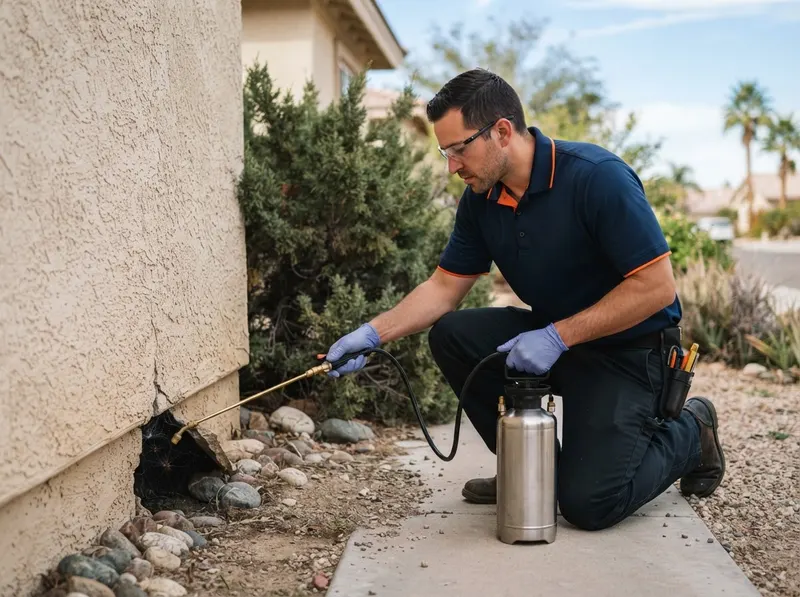
Riverside properties face persistent pressure from the Western black widow (Latrodectus hesperus) and native desert spiders due to intense summer heat waves and arid scrub terrain. When outdoor temperatures routinely pass 95 degrees Fahrenheit near California Citrus State Historic Park or along the canyon flanks of Sycamore Canyon Wilderness Park, arachnids migrate toward sheltered residential irrigation boxes, slab perimeters, and foundation vents. The primary treatment objective is severing pest transit corridors into living quarters while clearing harborage sites across property perimeters.
Structural defense requires targeted mechanical removal paired with residual non-repellent applications rather than broad outdoor fogging. Technicians de-web exterior overhangs, patio covers, window wells, and low foundation lines up to 10 feet high using specialized scraping poles. This eliminates silken retreat funnels and dislodges egg sacs containing up to 400 spiderlings each. Barrier treatments adhere strictly to environmental safety thresholds set by the California Department of Pesticide Regulation, creating an impenetrable 3-foot vertical and horizontal perimeter along foundation walls to intercept wandering prey insects like crickets and silverfish that attract predatory spiders.
Older architectural stock in the historic Wood Streets and Downtown Riverside requires specific masonry checks where brick seams and crawlspace vents allow unmonitored entry. Conversely, newer track developments in Orangecrest and Mission Grove often harbor dense populations inside plastic water meter boxes and vinyl perimeter fencing. For properties in Hawarden Hills and Victoria with stone retaining walls, targeted micro-encapsulated formulations resist degradation from extreme sunlight as governed by pesticide guidance from the US Environmental Protection Agency. Interior living zones remain protected through physical exclusion steps that seal plumbing pass-throughs with copper mesh and silicone caulking as recommended by the International Association of Certified Home Inspectors.
Safety protocol dictates that family members and domestic animals stay clear of treated zones for 2 hours until liquid barrier films dry completely. Technicians document exterior entry vulnerabilities following standards outlined by the National Pest Management Association and align IPM recommendations with guidelines published by the University of California Statewide Integrated Pest Management Program. Structural improvements, such as maintaining a 12-inch clear zone between ornamental shrubs and stucco foundations per CAL FIRE Defensible Space protocols, drastically reduce recurring infestations without requiring perpetual chemical exposure.
Every job gets a firm, written price after a free on-site visit.
For standards, safe disposal, and service guidance on pest control services in Riverside, CA, useful references include U.S. EPA, ENERGY STAR, U.S. Dept. of Energy, Consumer.gov, U.S. Census Bureau, and Google Maps. General consumer and small-business resources are available from USA.gov, Better Business Bureau, FTC Consumer Advice, U.S. Small Business Administration, and Ready.gov.
Tell us about your black widow & desert spider defense job in Riverside and we'll send a clear, written quote, usually the same day.
 Nationwide Pest Defense